
Agent management
Give each employee, team, or role a managed AI agent with its own runtime identity and admin-controlled access.
Learn more
Private AI agent platform
HermesHive by Jetcalls gives companies a private management layer for Hermes, Claude Code CLI, and OpenAI Codex CLI agents. Employees use the agents for real work; admins control deployment, tenant isolation, approved skills, storage, logs, usage, and model spend.
A private platform for operating employee AI agents as company infrastructure instead of unmanaged personal chatbot accounts.
Give each employee, team, or role a managed AI agent with its own runtime identity and admin-controlled access.
Learn moreKeep memory, sessions, browser profiles, workspaces, logs, and secrets separated per employee, team, or agent.
Learn moreAttribute runs, schedules, model usage, token usage, and costs before AI spend turns into a black box.
Learn more01
HermesHive by Jetcalls gives each employee, team, or operational role a company-owned agent identity. Admins control the agent's runtime, memory, tools, storage, credentials, logs, and behavior instead of leaving work inside unmanaged personal AI accounts.
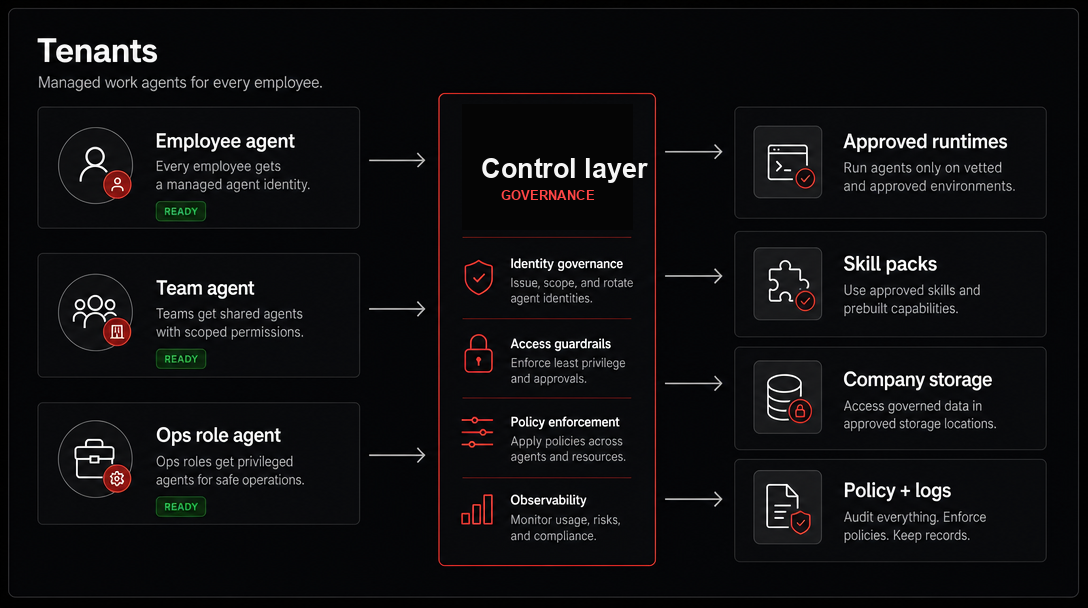
Create agents for employees, departments, service desks, engineering teams, or recurring operational roles.
Agent memory, files, logs, and outputs stay under the company's selected deployment boundary.
Run Hermes, Codex-style, Claude-style, or other approved agent runtimes under one operating model.
Connect agents to approved skills, storage, credentials, and policies.
Employees get practical AI help for real work while the company keeps ownership and control of the agent identity.
02
HermesHive by Jetcalls gives platform teams a single place to create agents, block access, wake idle runtimes, stop active work, inspect state, manage schedules, and roll out runtime releases. Agents become managed infrastructure instead of unowned scripts running across teams.
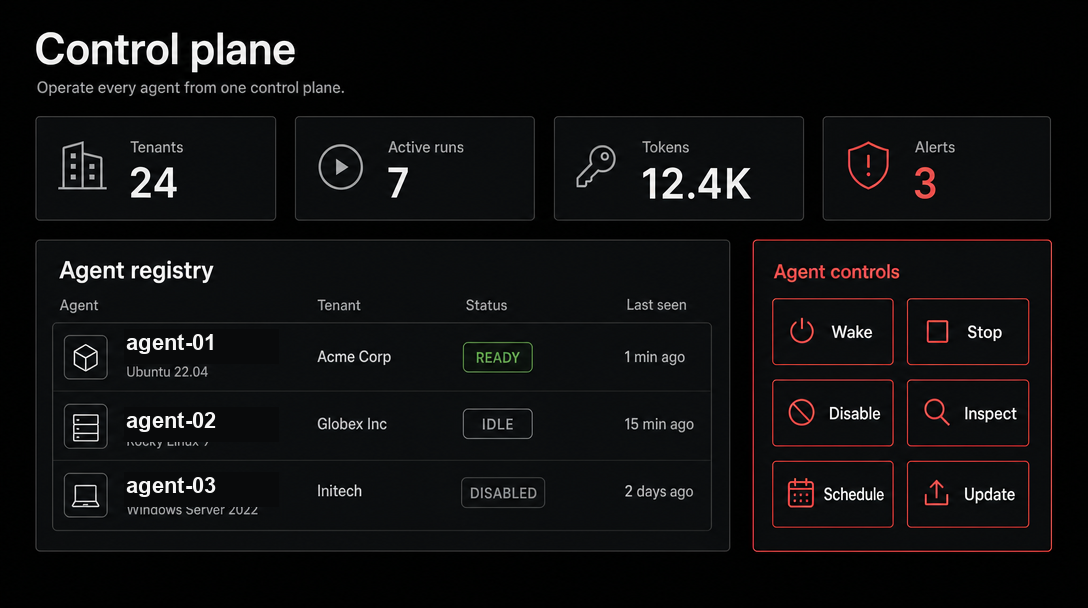
Track which person, team, or role owns each agent and where operational controls apply.
Wake, stop, disable, inspect, and schedule agents without manual server debugging.
Decide which tools, models, credentials, adapters, and runtime features each tenant may use.
Publish, activate, pin, or roll back approved agent runtime versions.
Connect runs, schedules, state changes, and policy actions to the agent registry.
Your platform team gets one operating model for managed agents instead of scattered runtimes and unclear ownership.
03
HermesHive by Jetcalls is built for companies that need AI agent infrastructure inside a controlled host or on-prem environment. Operations teams keep ownership of network access, credentials, storage, logs, updates, adapters, and runtime policy.
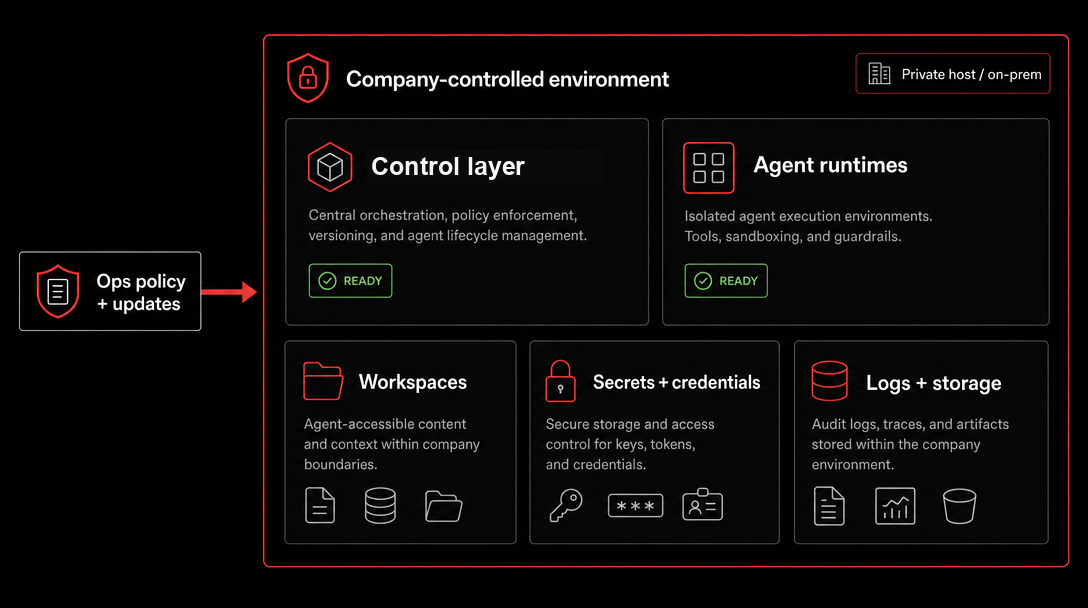
Deploy agent infrastructure where the enterprise already governs sensitive workloads.
Keep workspaces, logs, secrets, storage, adapters, and runtime state inside the selected deployment boundary.
Let internal operations teams control upgrades, connectivity, credentials, and access policy.
Run managed employee agents without moving operational ownership to unmanaged personal chatbot accounts.
Teams can adopt AI agents while keeping deployment ownership with the enterprise operations team.
04
Each employee, team, or role agent runs inside its own tenant boundary. HermesHive by Jetcalls keeps memory, sessions, browser profiles, logs, secrets, files, and runtime state separated so one agent does not inherit another tenant's private context.
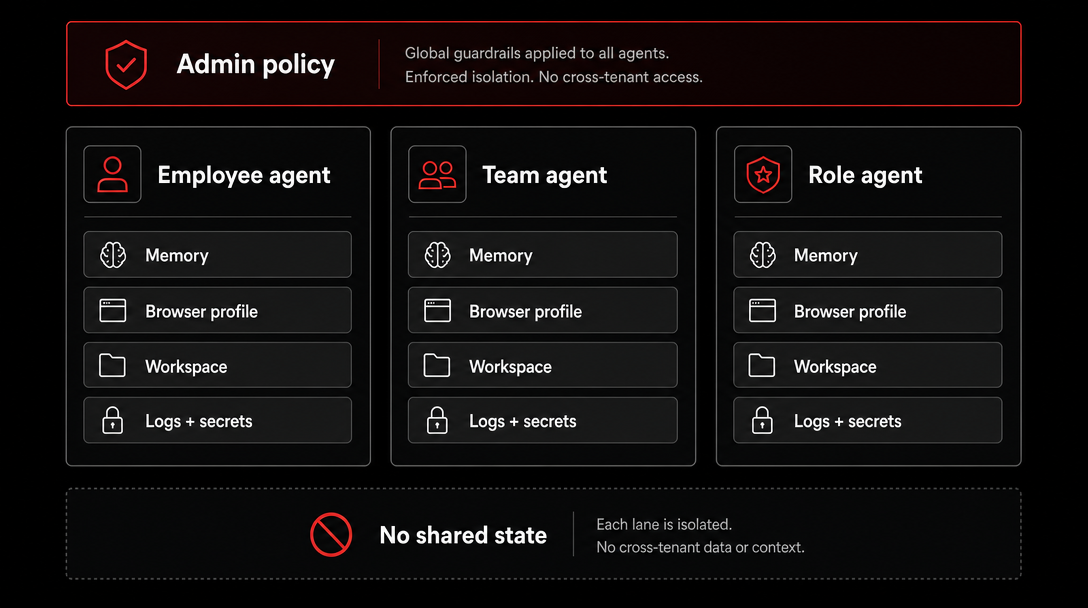
Each employee, team, or role agent gets a distinct execution identity.
Browser cookies, sessions, and profiles are not reused across tenant boundaries.
Logs, files, managed secrets, and runtime state are attributed to the owning tenant.
Admin policy defines which tenant boundary each agent belongs to.
Companies can deploy many managed agents without merging private user, team, browser, or workspace state.
05
Agent runtimes change quickly. HermesHive by Jetcalls gives admins a release process for approved runtime versions, tenant pinning, staged activation, and rollback when an update breaks a workflow.
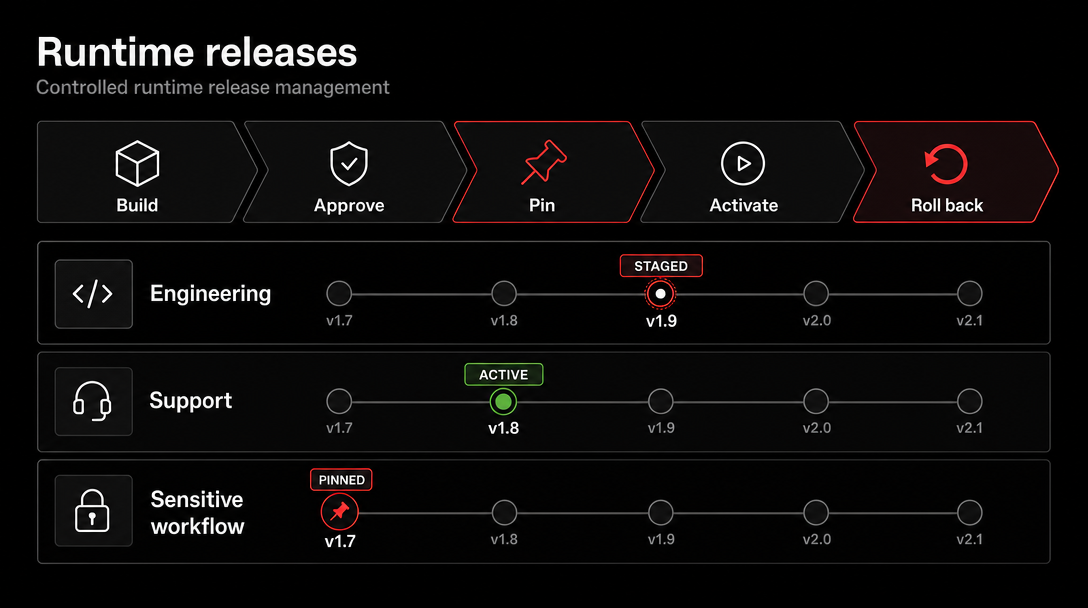
Publish approved runtime versions from one controlled release surface.
Keep specific teams or workflows on a known-good runtime version.
Move selected tenants forward before activating a release broadly.
Return affected tenants to a previous working runtime without rebuilding each tenant manually.
Agent upgrades become an operations-managed release process instead of per-employee runtime drift.
06
HermesHive by Jetcalls gives companies a governed place to package reusable agent skills, prompts, runbooks, and procedures. Admins install approved packs into the employee, team, or role agents that need them.
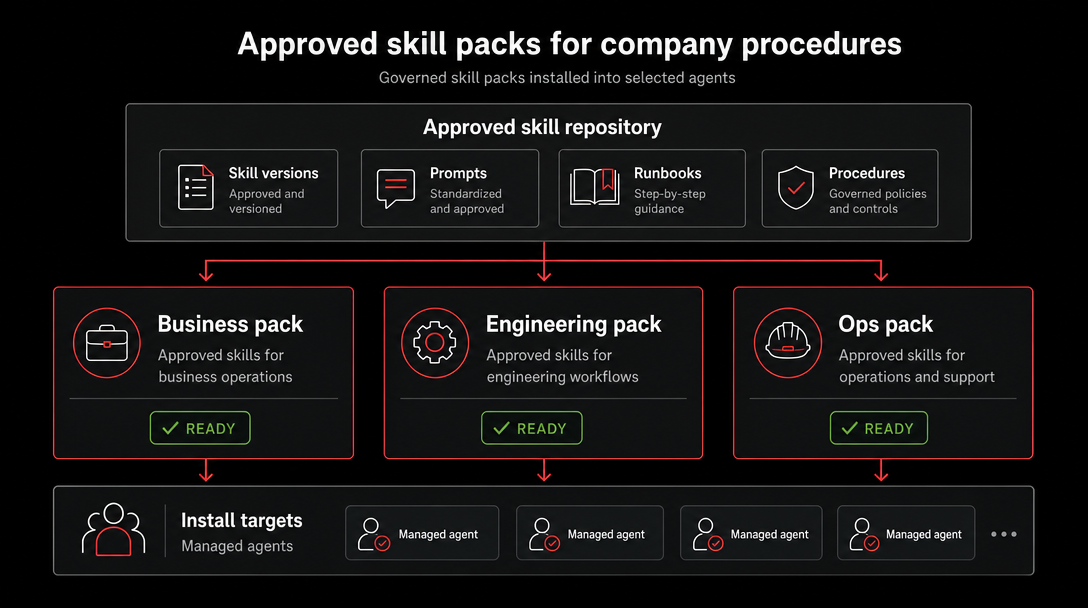
Keep reusable capabilities, prompts, runbooks, and procedures in one governed source.
Ship business, engineering, support, operations, or company-specific packs to selected agents.
Decide which agents receive each approved capability set.
Give similar agents the same reviewed procedures instead of copying prompts by hand.
Agent behavior becomes consistent enough to review, improve, and operate as company procedure.
07
HermesHive by Jetcalls gives each managed agent a durable workspace and connects approved agents to shared company storage. Reports, drafts, ledgers, snapshots, context, and team files stay in controlled locations instead of disappearing into chat history.
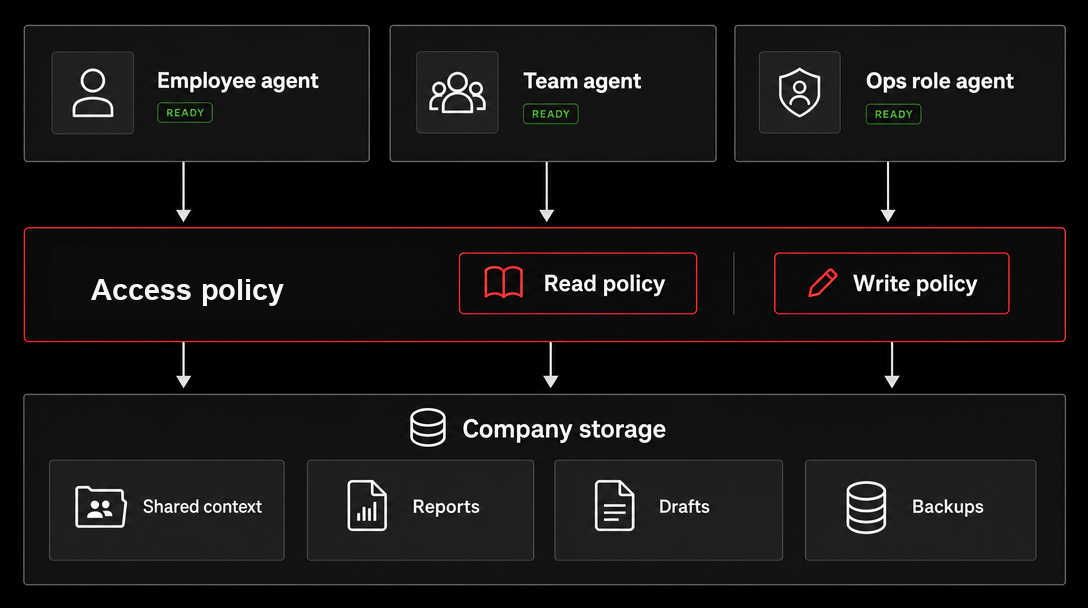
Agents can write reports, drafts, ledgers, snapshots, and other outputs that survive a session.
Teams and trusted agents can work from selected company documents and operational data.
Access follows employee, team, tenant, and workflow boundaries.
Agent work can become files, records, or reusable context for future company work.
Agent output becomes part of company work storage instead of disposable chat fragments.
08
HermesHive by Jetcalls records agent runs, requests, model usage, token usage, schedules, lifecycle events, and outcomes in a usage ledger. Admins can attribute activity by employee, team, agent, tenant, day, and model before spend becomes an unexplained provider bill.
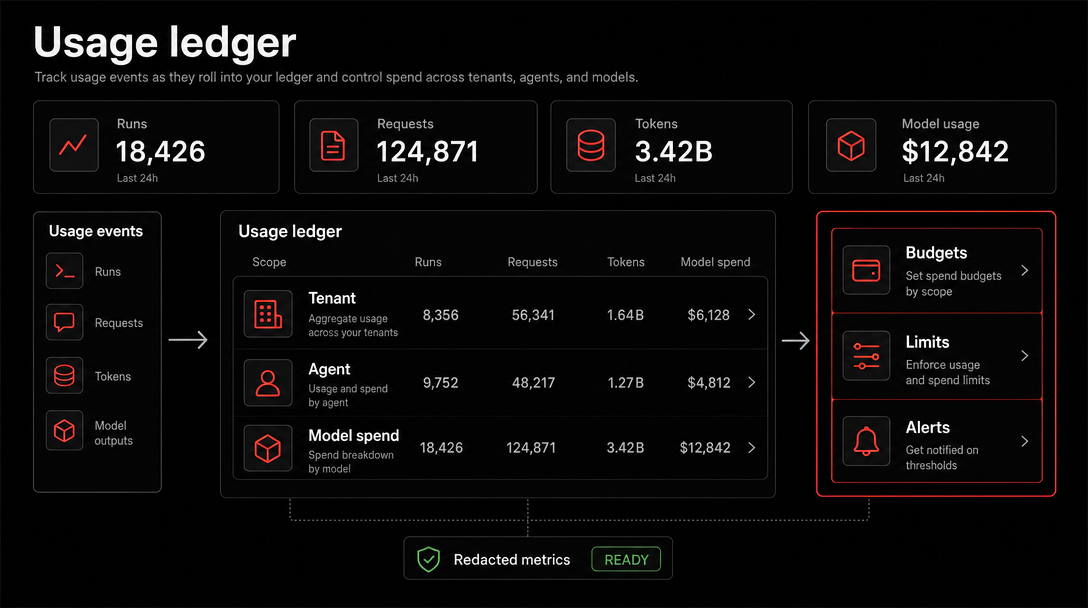
Inspect runs, request history, lifecycle events, schedules, and outcomes.
Roll up model and token usage by employee, team, agent, tenant, day, and model.
Apply budgets, limits, alerts, and policies for expensive models and tools.
Track operational outcomes without exposing task content when it should remain private.
Admins can connect AI spend to the agents and teams that caused it, then control future usage with platform-level budgets and limits.
09
Employees can work with agents from familiar chat-style channels while HermesHive by Jetcalls keeps adapter routing, tenant policy, replies, media handling, and logs under platform control. Current source-backed channels are HubChat, WhatsApp, and Telegram.
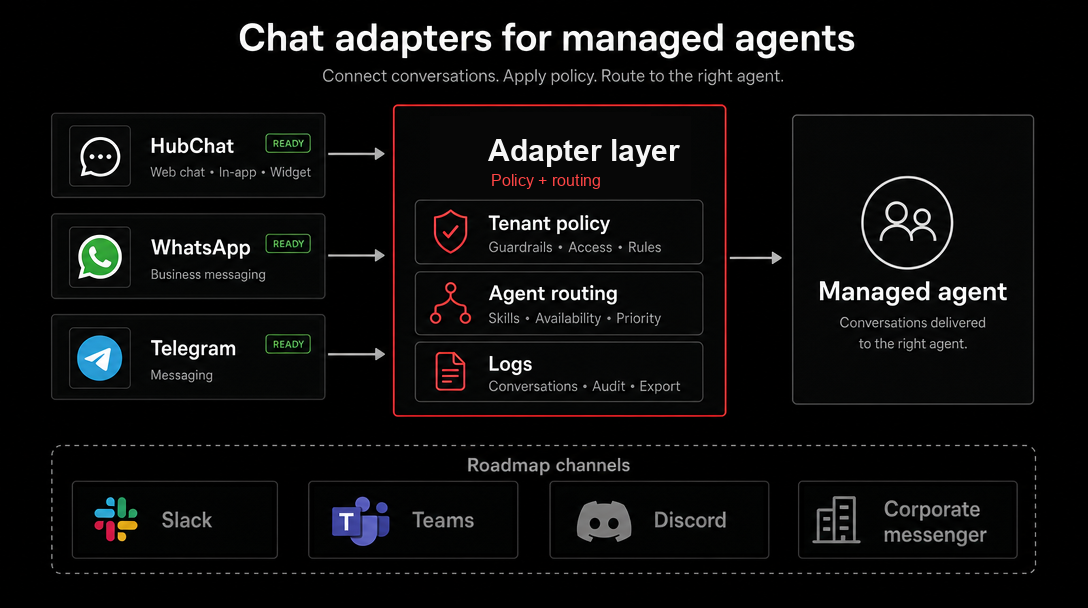
HubChat, WhatsApp, and Telegram are the implemented/source-backed adapter set.
Messages route through HermesHive by Jetcalls before reaching managed agents.
Media handling, outbound replies, and voice transcription are source-backed capabilities.
Slack, Microsoft Teams, Discord, and corporate messenger stay roadmap/directional until implementation evidence exists.
Admin policy, logs, and tenant controls remain part of the agent operating layer.
Employees can use agents from supported channels without turning agent communication into unmanaged personal chat infrastructure.
10
HermesHive by Jetcalls' browser-extension direction is to connect a company-managed personal agent to the employee's real browser work. The target UX keeps the employee aware of page context and assisted actions, with automation promoted only after review.
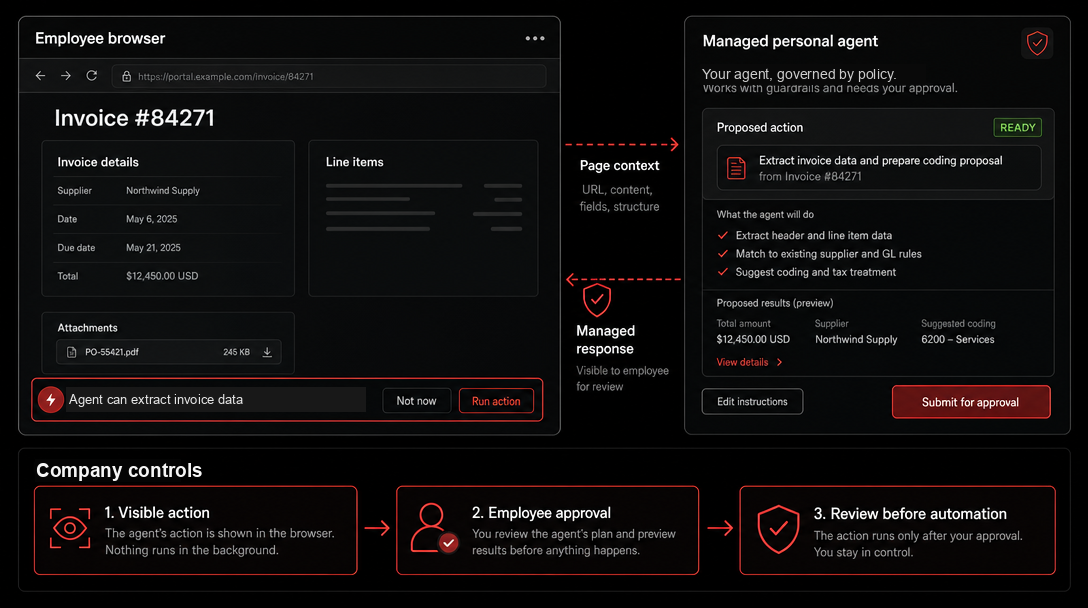
Target help for the form, dashboard, or workflow already open in the employee browser.
Keep browser manipulation visible so the employee can see and control agent actions.
Repeated browser steps can become automation candidates instead of hidden background automation.
Promote repetitive work only after review into a governed agent workflow.
Employees can get help inside real browser work while the company controls context, action visibility, review, and automation boundaries.
11
HermesHive by Jetcalls' process-mining direction is to use governed browser and agent workflow signals to identify repeated work and propose automation candidates for review. This stays framed as a target UX until implementation evidence exists.
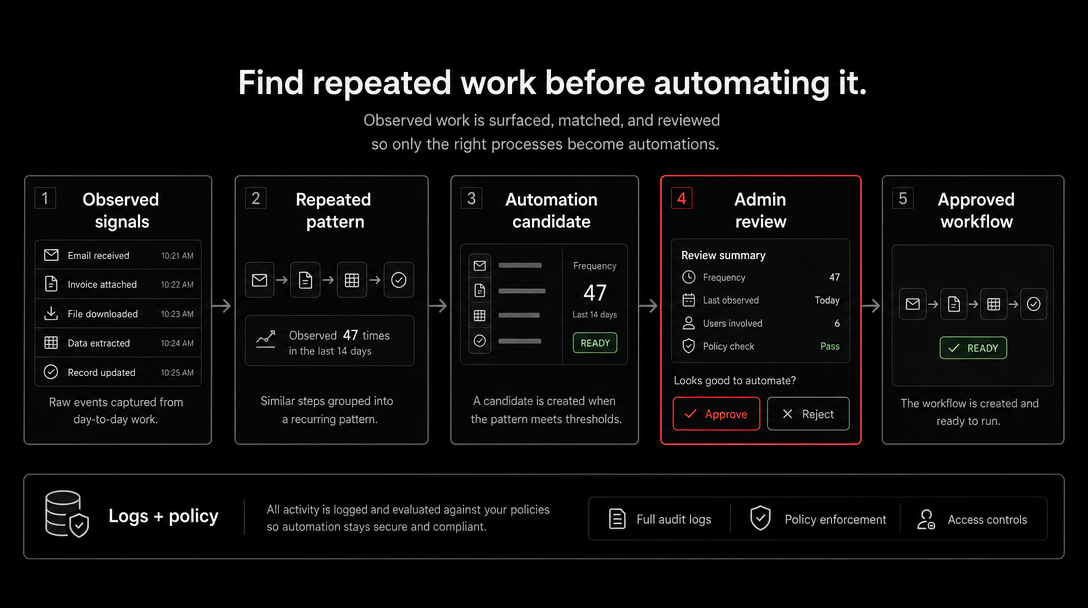
Browser steps and agent run patterns become inputs for analysis.
Recurring tasks, handoffs, forms, and operational loops can be grouped into candidates.
Suggestions pass through admin or operator review before becoming workflows.
Approved automations should inherit logs, policy, and tenant controls.
Automation priorities come from observed repetition, not generic guesses about what employees might automate.
Request a demo to map your employee-agent rollout, hosting boundary, admin controls, skills, storage, communication channels, and usage controls.
1-954-228-0777
enterprise@hermeshive.app